A rolling stock manufacturer’s biggest promise is not the delivery date. It is that every weld on a car body, underframe and bogie will hold for thirty years of service, and that the paperwork can prove it. Coach shells run to 20-plus metres of stainless steel or aluminium with thin sections that distort if the heat input drifts. Bogie frames carry fatigue loads that expose any lack of penetration. Wagons are a volume game where margin lives in cycle time. Behind all of it sits an inspection and documentation regime, whether the client is Indian Railways or a global OEM, that treats every joint as auditable. That is the production environment Drupe builds for.
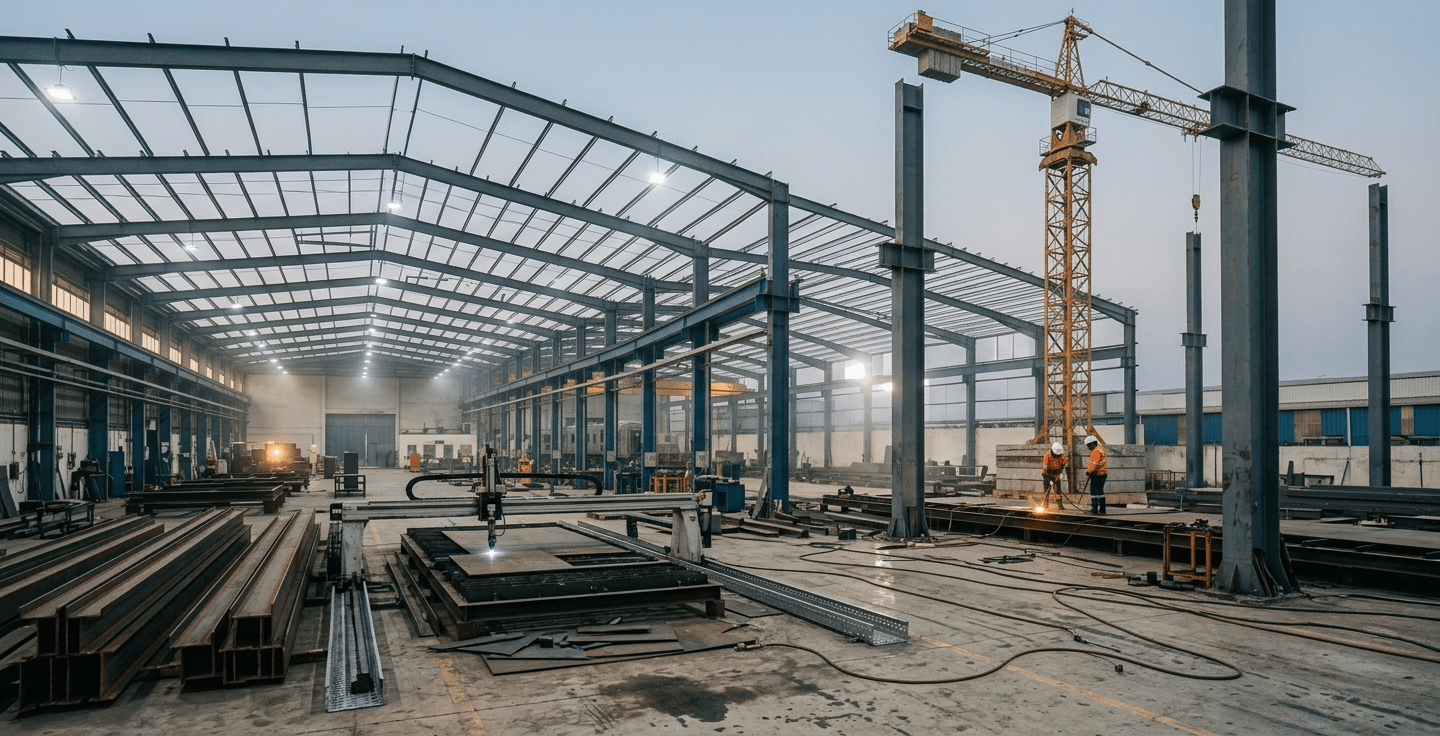
Approved supplier to L&T, Godrej and heavy structural fabricators across India. Every system engineered and fabricated at our 300-ton MIDC Taloja floor, sized for the throughput PEB production demands.
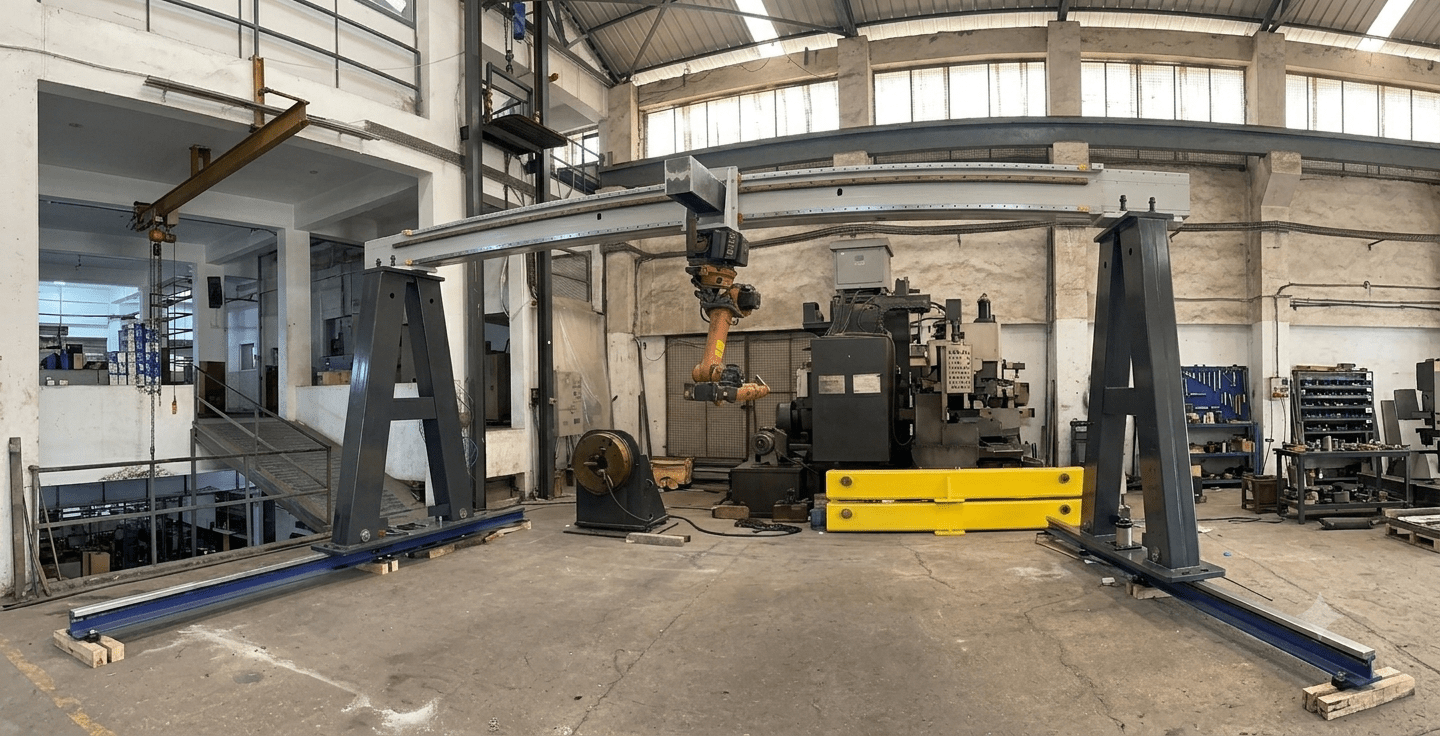
1. Robotic Wagon Body Welding Eight-axis robotic welding cells built for freight wagon bodies, with a working envelope of 10,000 mm x 2,500 mm x 2,000 mm. A six-axis robot on a servo linear column covers the full wagon length, while a servo-driven rotating cantilever frame handles loading and unloading so the robot never waits on the crane. Camera-based seam tracking follows the weld bath in real time, holding the programmed path across wagon-length joints where fit-up is never perfect.
2. Robotic Axle & Bogie Component Welding Rotational welding cells for railway axles and similar fatigue-critical components, sized for jobs up to 3,000 mm x 1,000 mm and 1,000 kg. Hydraulic headstock and tailstock clamping locks the part on centre; a robot-controlled rotary axis and linear column keep the torch in the flat position for the whole joint. Seam tracking and PLC-controlled load/unload deliver the repeatability that bogie and running-gear inspection demands.
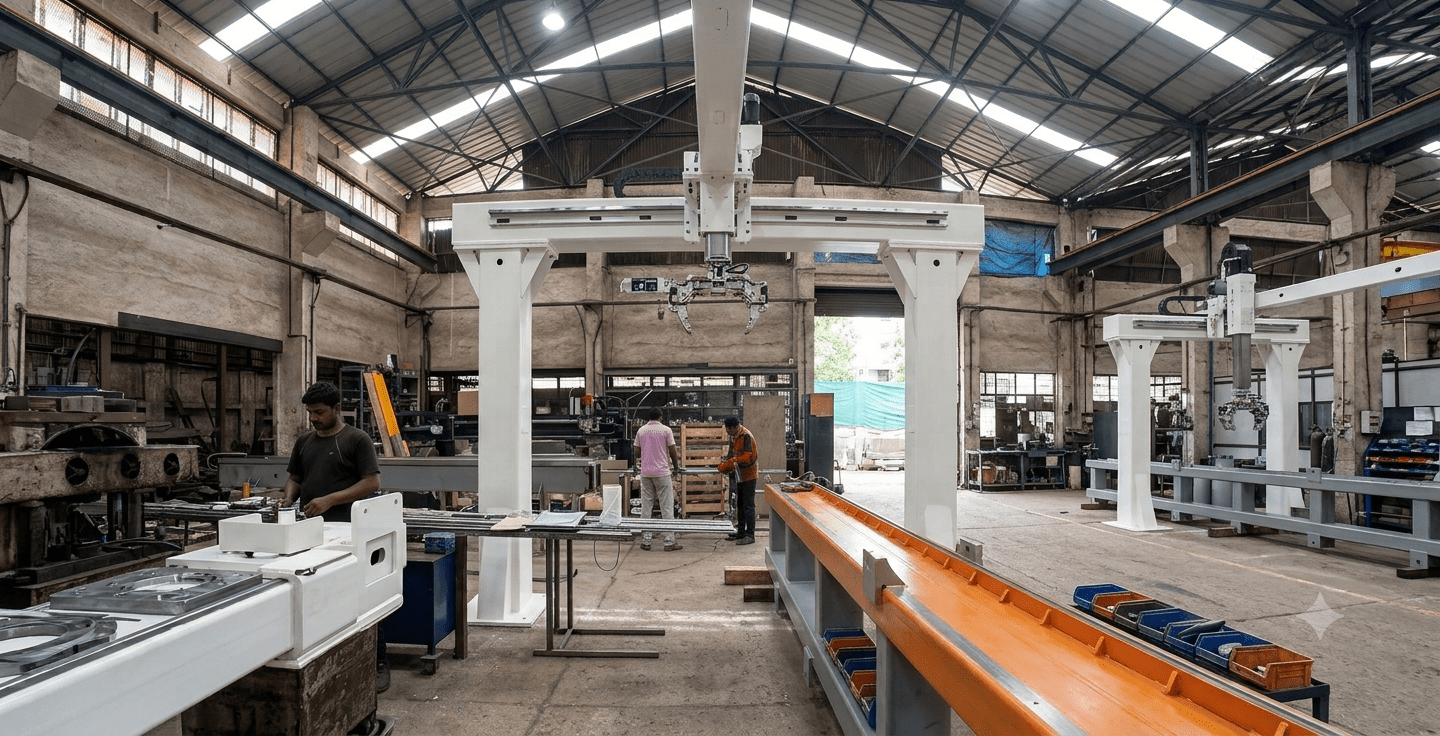
3. Coach Shell & Underframe Long-Seam Welding Column-and-boom manipulators, TIG/SAW welding gantries and rotary positioners for the long longitudinal seams on coach side walls, roofs and underframes. Positioner tables rated to 5,000 kg bring the joint to the welder instead of the welder to the joint. Controlled travel speed and heat input are what hold thin-section stainless and aluminium panels inside distortion tolerance over a 20-metre car body.
4. CNC Plasma & Oxy-Fuel Cutting for Underframe and Bogie Plate Gantry and table-type CNC cutting machines with Hypertherm plasma, Nissan Tanaka oxy-fuel and IHT torch height control, running on Atlanta rack-and-pinion drives, Hiwin guideways and Mitsubishi servo motion. Built for the cross-members, brackets, gussets and bogie plate parts that feed the welding line, with nesting software and multi-torch options for volume runs.
5. Heavy Component Handling & Robot Linear Tracks Pick-and-place gantries with horizontal strokes up to 20,000 mm and floor-mounted 7th-axis robot tracks with carriage capacities from 100 kg to 5,000 kg at speeds of 100 mm/sec to 1,500 mm/sec. Moves underframes, bogie frames and sub-assemblies between cutting, welding and assembly stations at ±0.5 mm repeatability, without manual lifting or crane queues at every bay.
From your first drawing to lifetime service, every project runs the same disciplined path.
In rolling stock, a weld has to pass inspection today and hold for thirty years, and the manufacturer has to prove both against a tender delivery schedule. Drupe has already built for that environment: our eight-axis robotic cell welds full 10-metre wagon bodies with camera-guided seam tracking, and our axle welding cells hold 1,000 kg components on centre through the whole joint. Indian Railways is an existing customer, and our approved supplier standing with L&T and Godrej means our systems have already cleared the procurement audits heavy-industry buyers run. Engineered, commissioned and supported in India by a 150-person team.
The system is engineered for repeatability first: stable parameters, controlled travel speed and fixed positioning make procedure qualification straightforward and hold the qualified procedure in production. Weld data capture can be integrated where your QA process or the client standard requires it. We work to your WPS and inspection regime rather than asking you to change it.
Yes. Our rotational welding cells hold components up to 3,000 mm x 1,000 mm and 1,000 kg between hydraulic headstock and tailstock, with a robot-controlled rotary axis keeping the torch in the flat position through the whole joint. The same platform is adapted for bogie sub-assemblies and similar fatigue-critical parts.
Yes. Cells are built around robot linear tracks, positioners and gantries that can be extended in stroke, payload or station count, and reprogrammed for new wagon or coach variants without replacing the base system. Most rail lines start with one welding station and add cutting, handling or a second cell as volume commitments grow.
We use cookies to improve your experience on our site. By using our site, you consent to cookies.
Manage your cookie preferences below:
Essential cookies enable basic functions and are necessary for the proper function of the website.
These cookies are needed for adding comments on this website.
Statistics cookies collect information anonymously. This information helps us understand how visitors use our website.
Google Analytics is a powerful tool that tracks and analyzes website traffic for informed marketing decisions.
Service URL: policies.google.com (opens in a new window)