

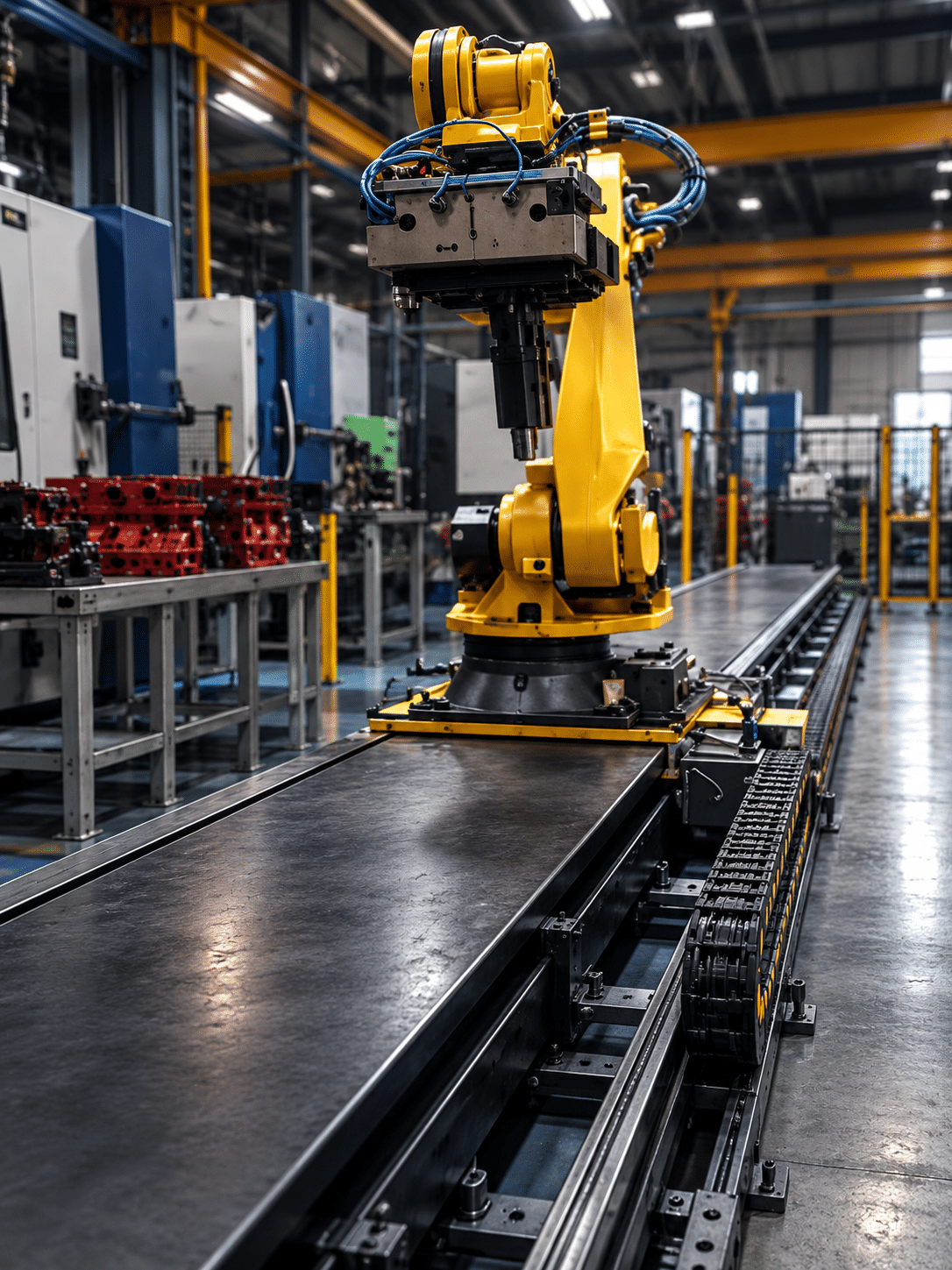









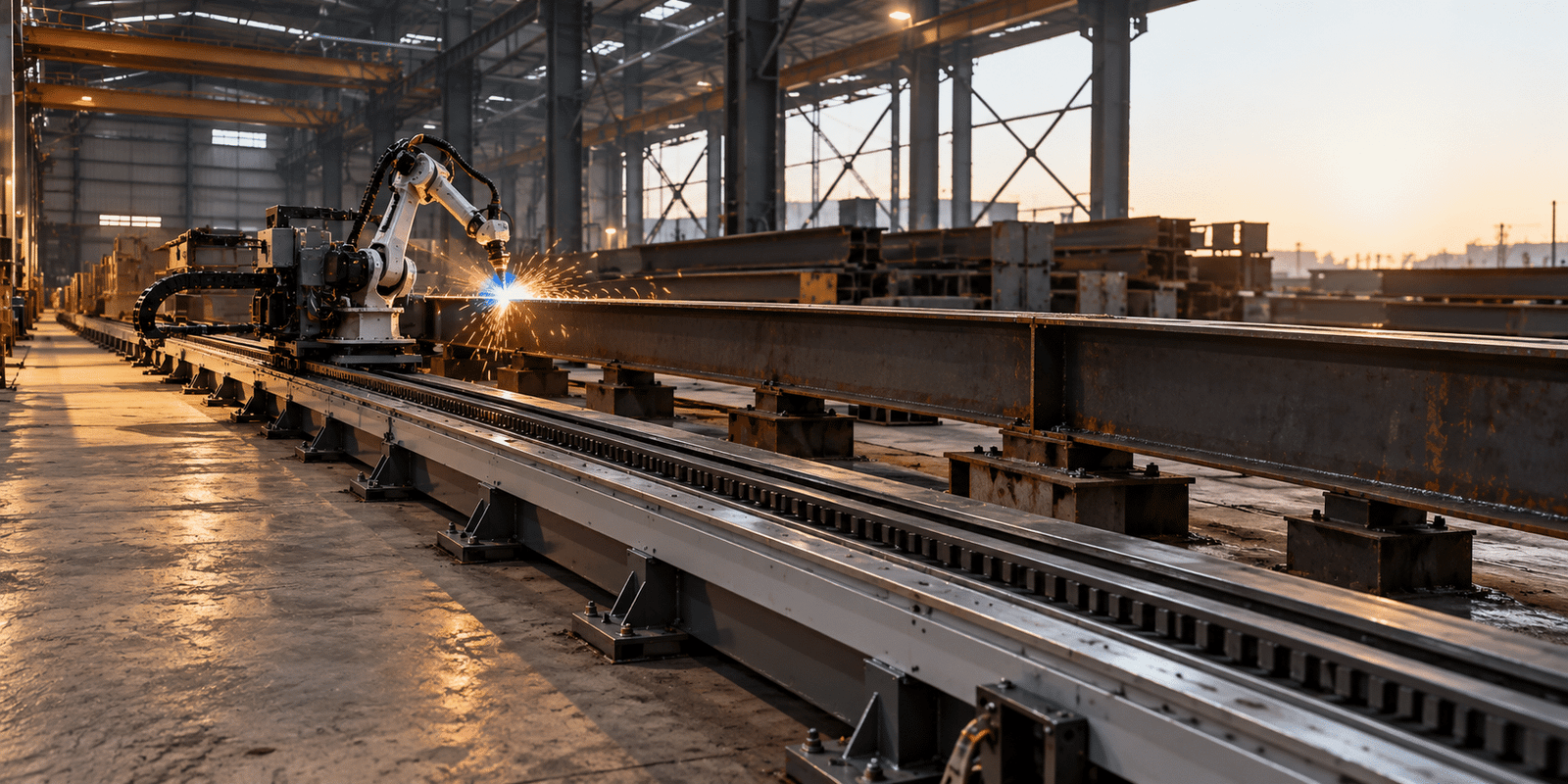
A standard robot reaches two to three metres. Structural beams run to twelve. A linear track moves the robot along the part, so one robot covers the full length instead of the part being moved past it.
Robot reach extended along the full part
Welding, grinding and cutting on one track
Medium, heavy and super heavy duty tracks
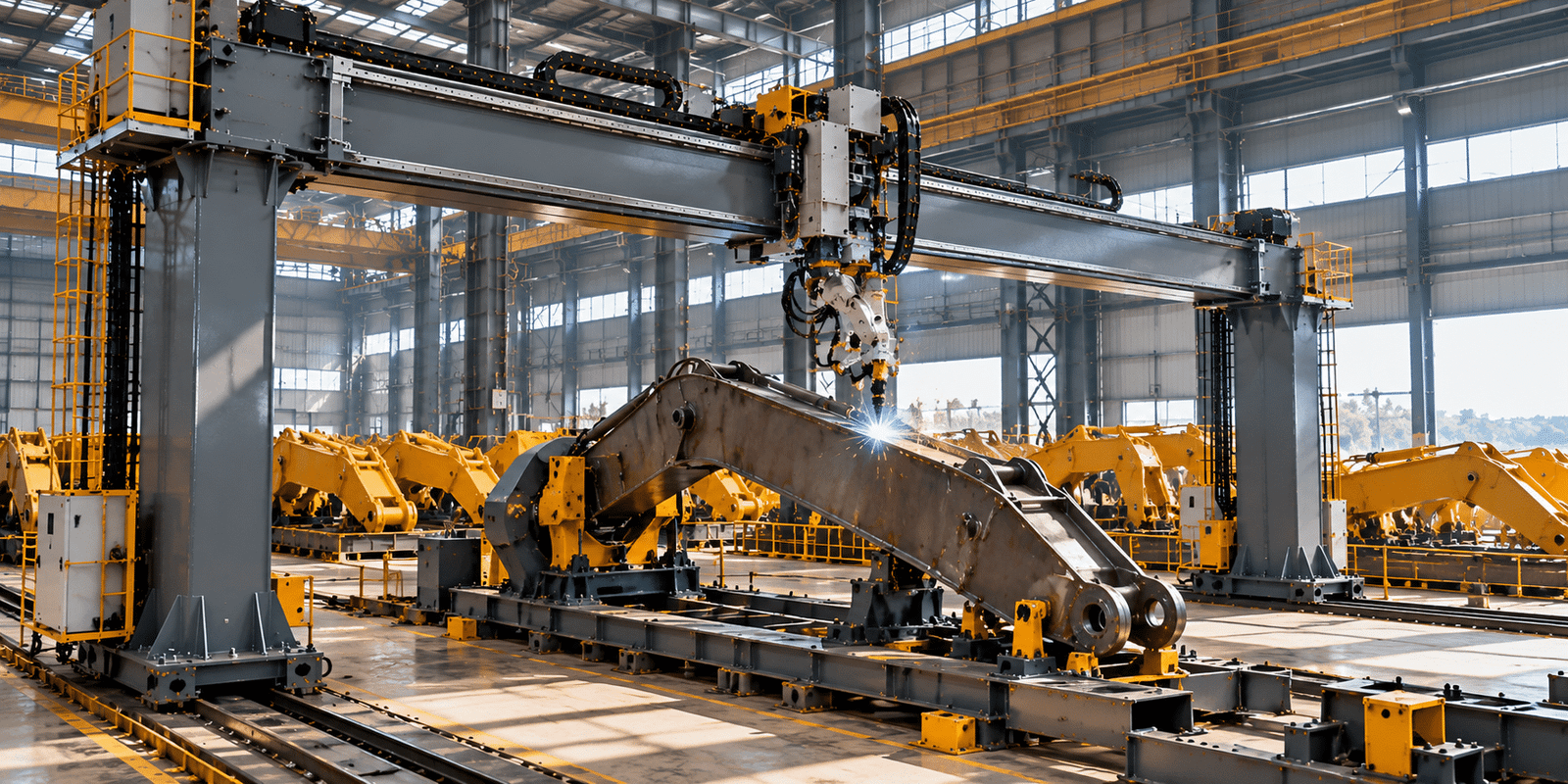
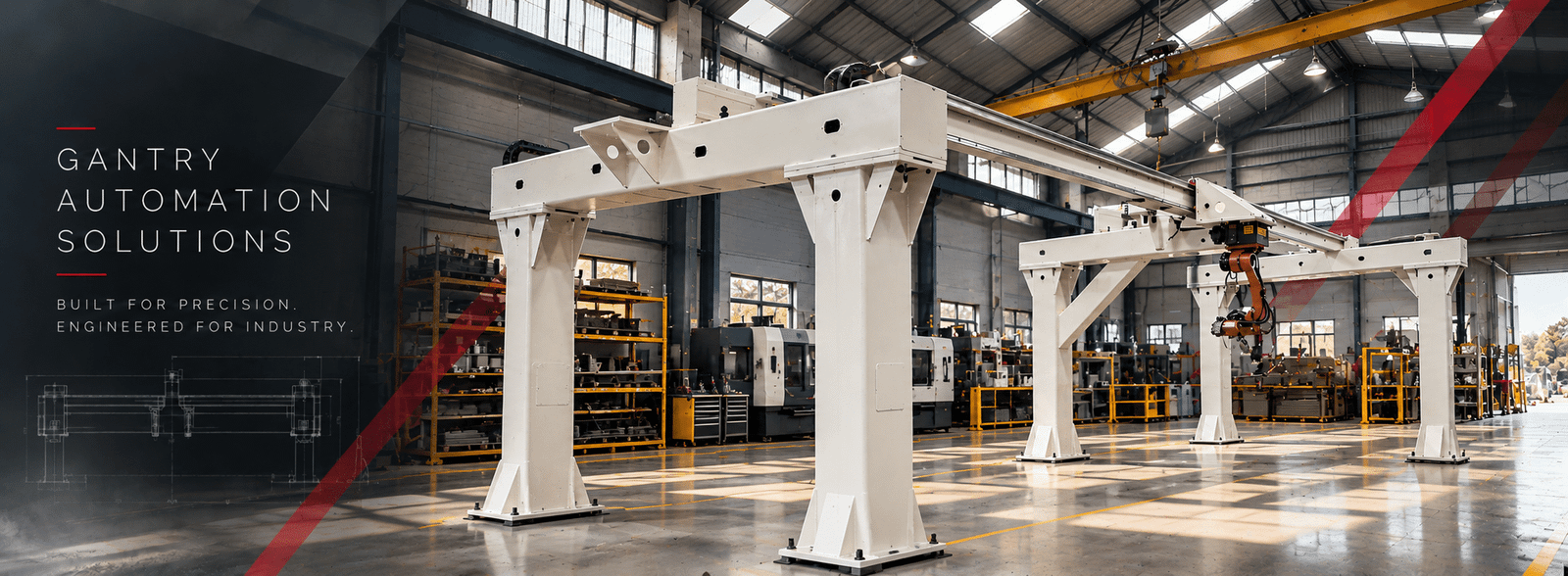
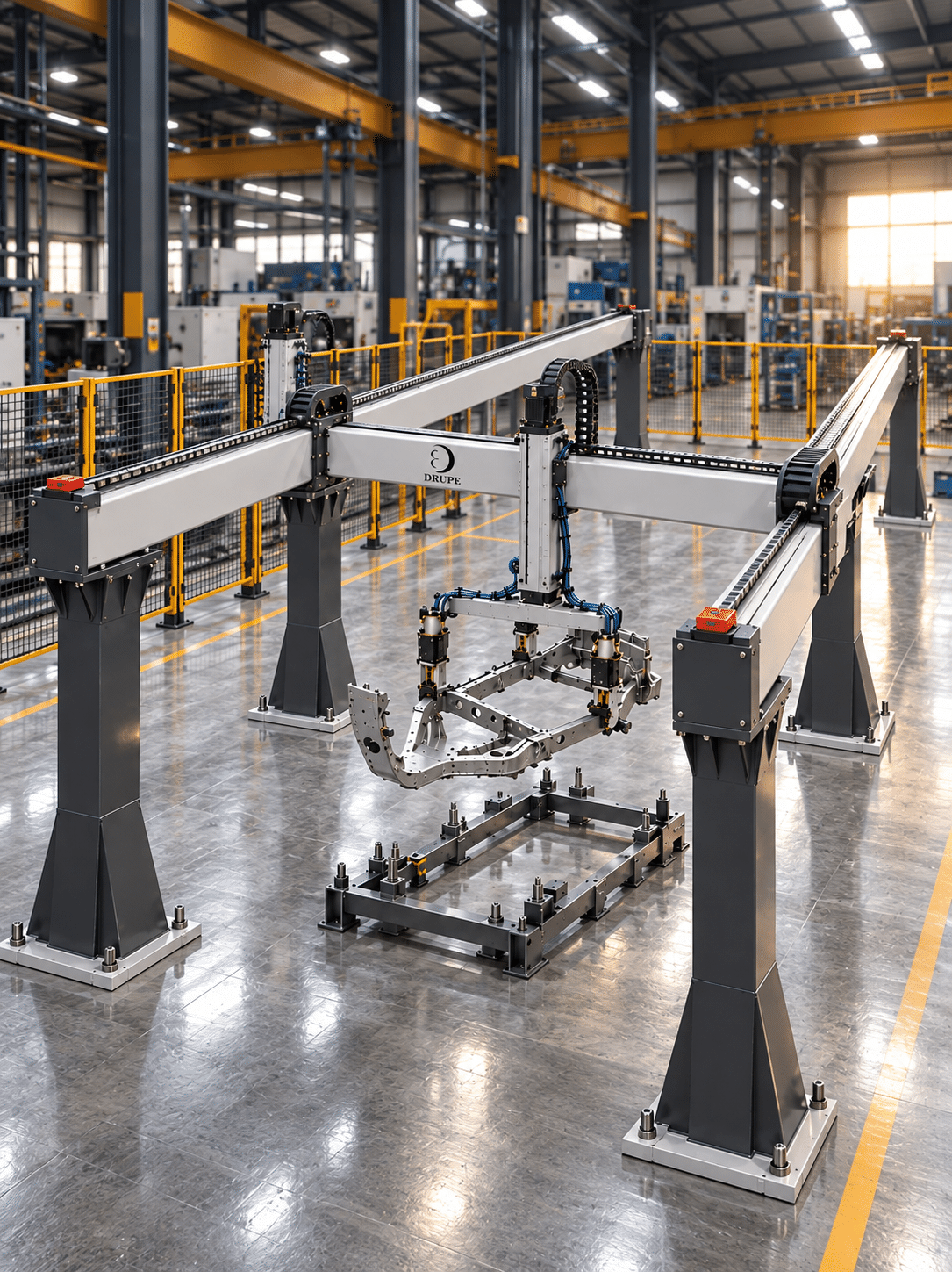
Booms and chassis frames are heavy and worked on every face. A gantry gives the robot access from above while the positioner turns the part, without re-fixturing between operations.
Overhead access to every face of the part
Heavy duty configurations for large parts
One cell across a family of part sizes
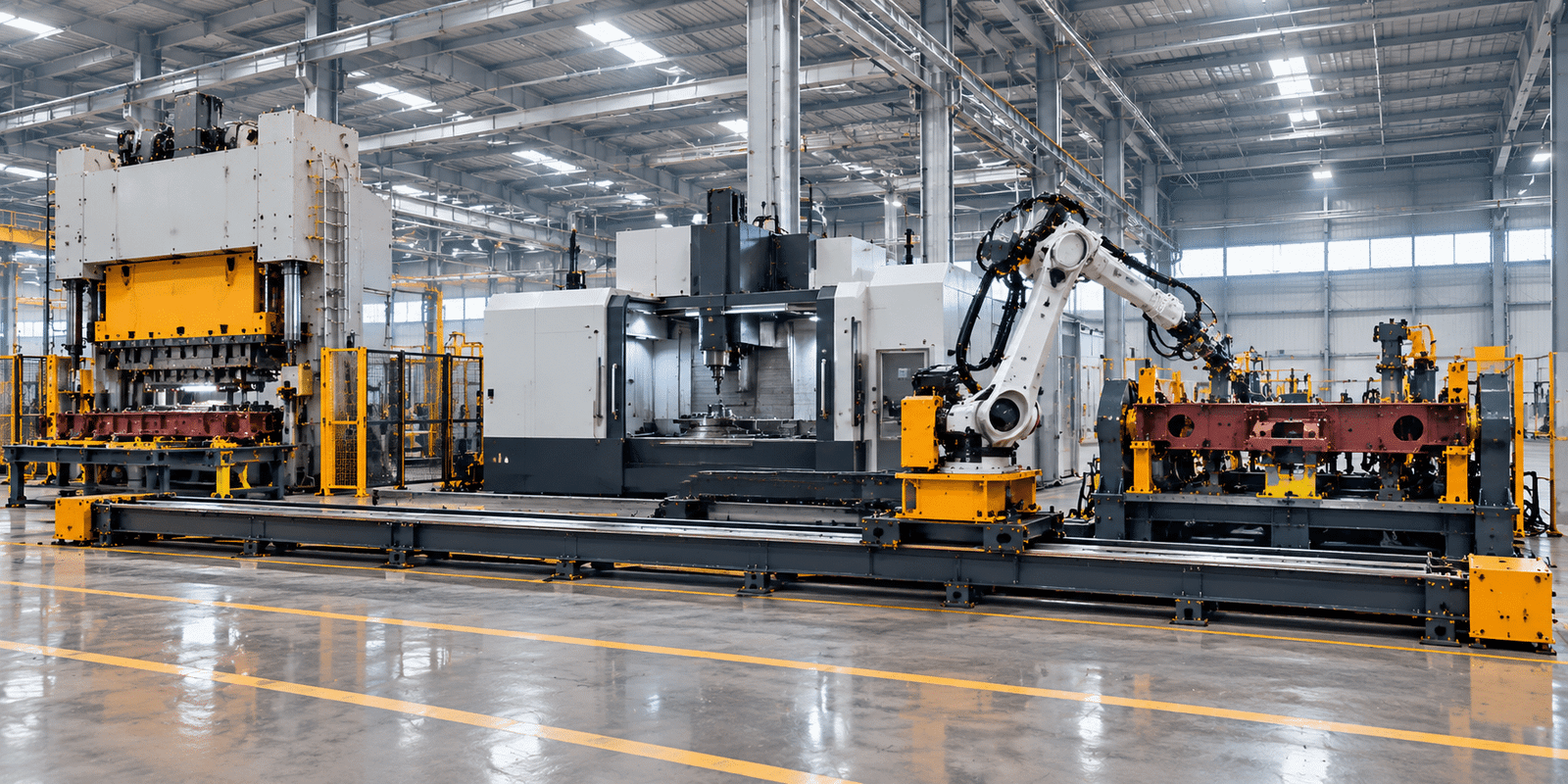
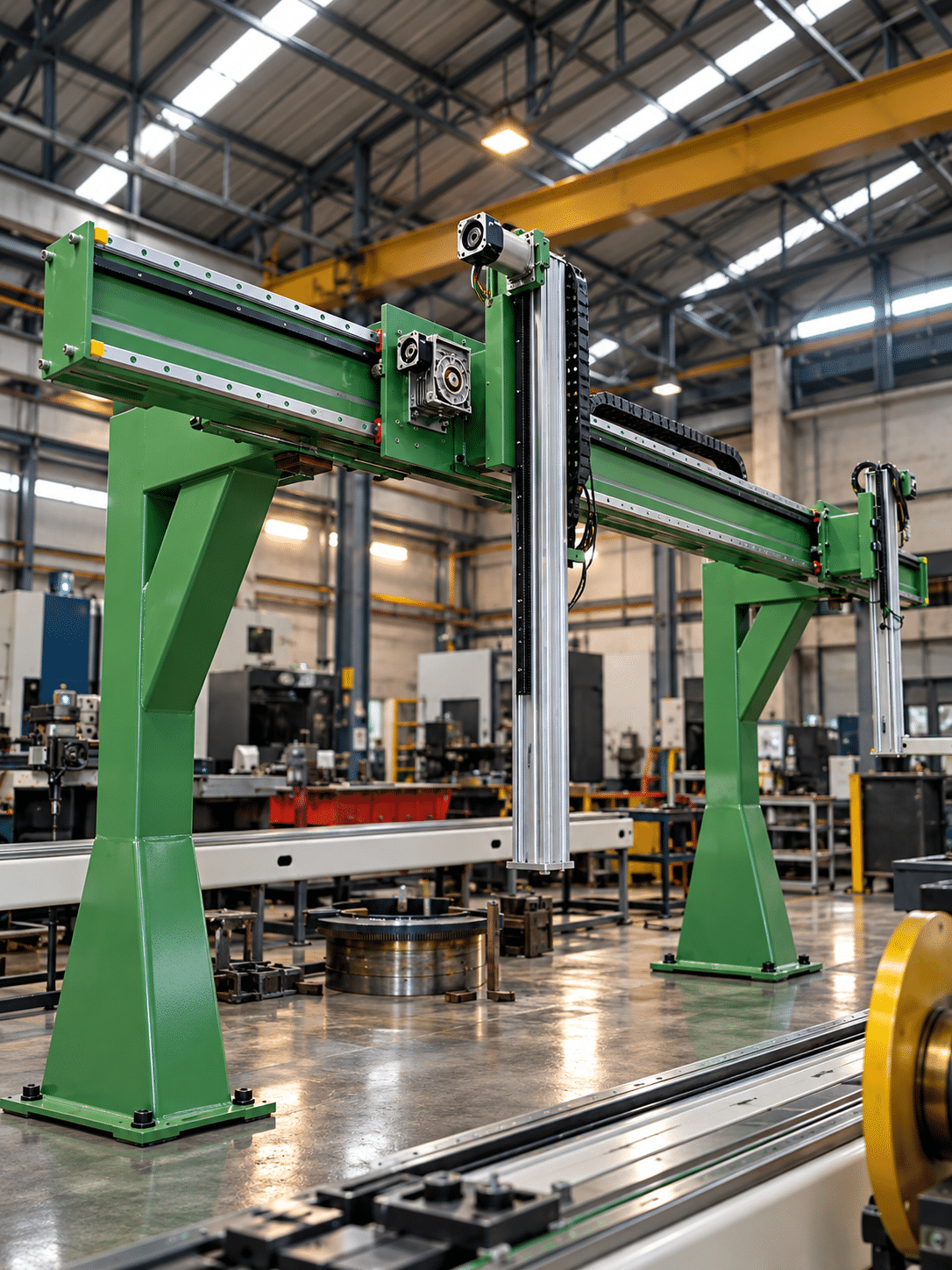
Most cells use one robot per station, idle for part of every cycle. A linear track lets one robot serve a press, a machine and a fixture in sequence, cutting the number of robots in the line.
One robot serving several stations
Seventh-axis track, up to ±0.05 mm
Fewer robots for the same output
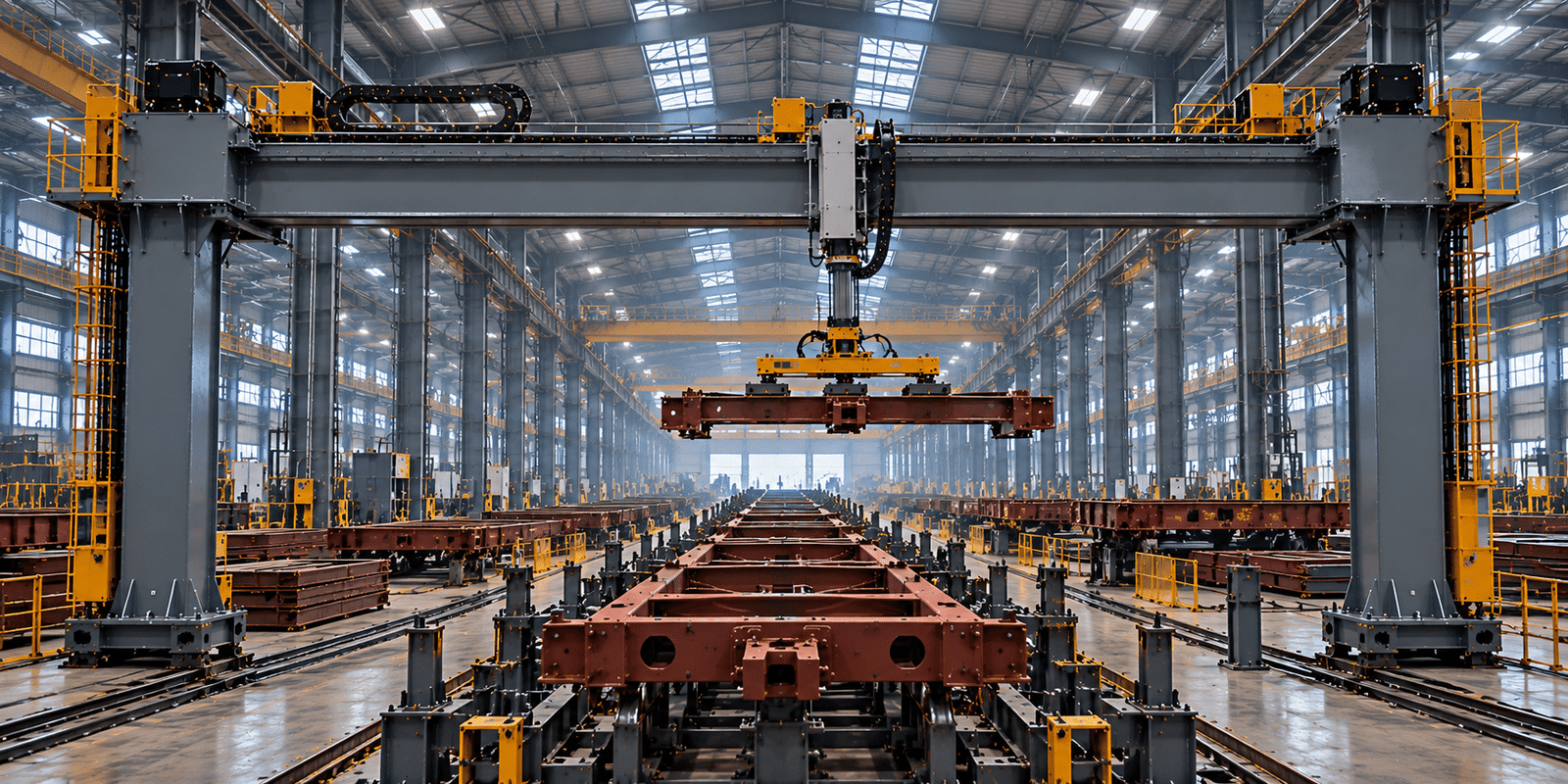
Wagon shells and underframes are long and built in series. A gantry or track moves the robot down the frame, so the same path repeats on every unit in the batch without moving the frame.
Tracks sized to full-length underframes
Same path repeated across the batch
Track repeatability to ±0.05 mm
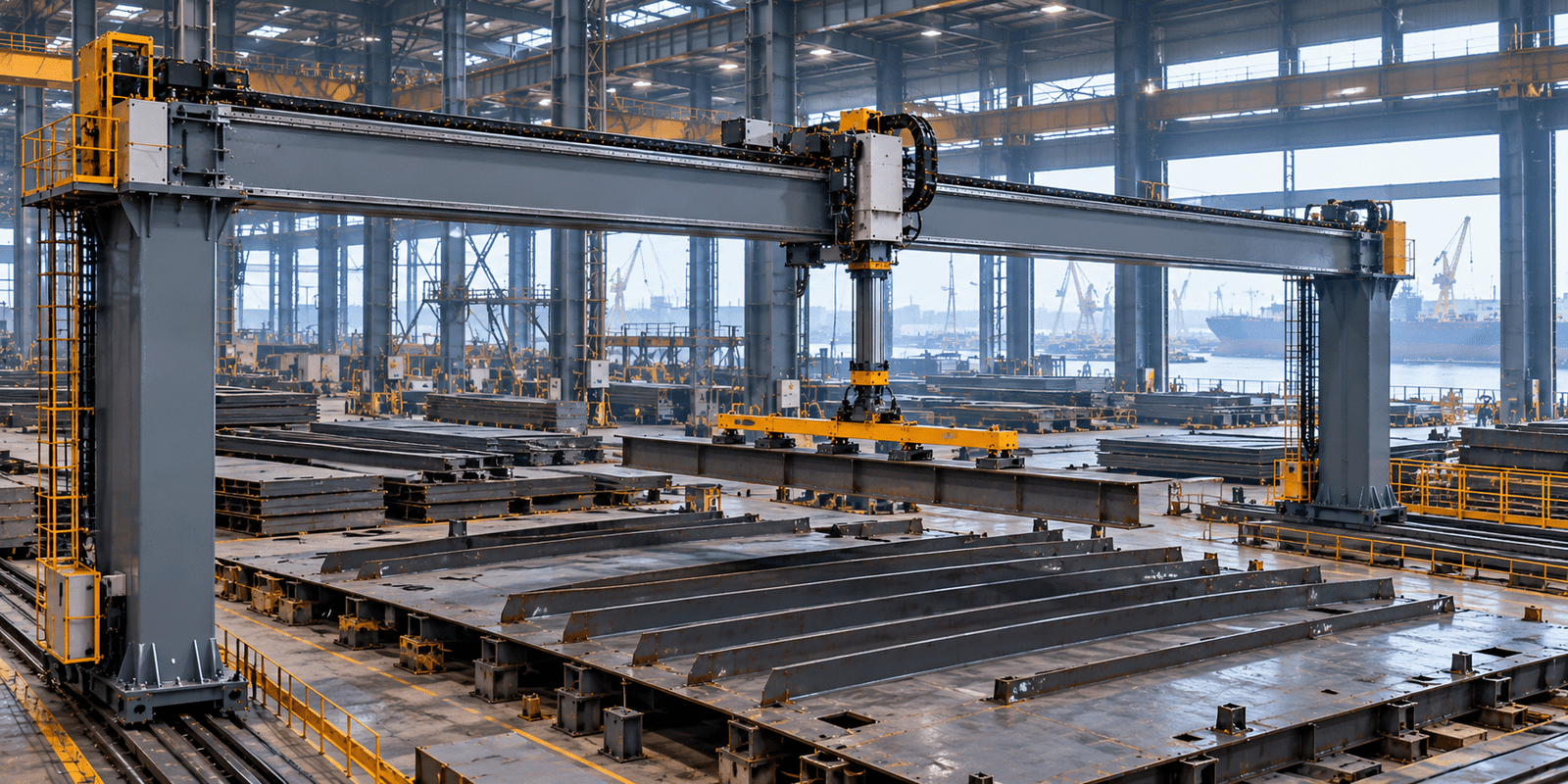
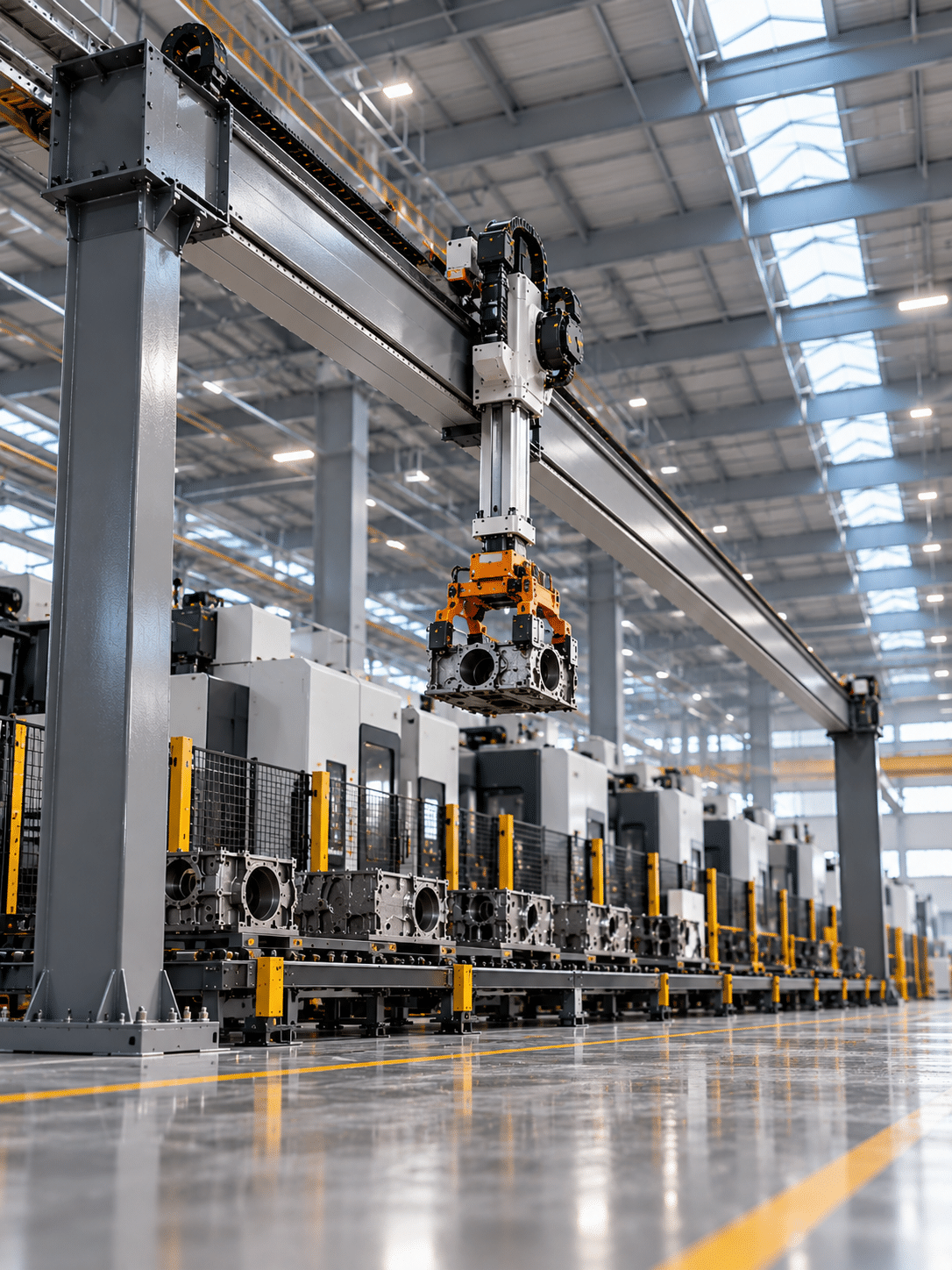
Hull panels are built from hundreds of plates and stiffeners, too heavy and too long to place by crane with precision. An overhead gantry picks each part from the stack and places it on the panel.
Plates and stiffeners placed on the panel
Magnetic and vacuum lifting heads
Floor kept clear for panel handling
A standard robot reaches two to three metres. Structural beams run to twelve. A linear track moves the robot along the part, so one robot covers the full length instead of the part being moved past it.
Robot reach extended along the full part
Welding, grinding and cutting on one track
Medium, heavy and super heavy duty tracks
Booms and chassis frames are heavy and worked on every face. A gantry gives the robot access from above while the positioner turns the part, without re-fixturing between operations.
Overhead access to every face of the part
Heavy duty configurations for large parts
One cell across a family of part sizes
Most cells use one robot per station, idle for part of every cycle. A linear track lets one robot serve a press, a machine and a fixture in sequence, cutting the number of robots in the line.
One robot serving several stations
Seventh-axis track, up to ±0.05 mm
Fewer robots for the same output
Wagon shells and underframes are long and built in series. A gantry or track moves the robot down the frame, so the same path repeats on every unit in the batch without moving the frame.
Tracks sized to full-length underframes
Same path repeated across the batch
Track repeatability to ±0.05 mm
Hull panels are built from hundreds of plates and stiffeners, too heavy and too long to place by crane with precision. An overhead gantry picks each part from the stack and places it on the panel.
Plates and stiffeners placed on the panel
Magnetic and vacuum lifting heads
Floor kept clear for panel handling