What is the difference between
Industry's standard dummy text ever...
Oil Factory

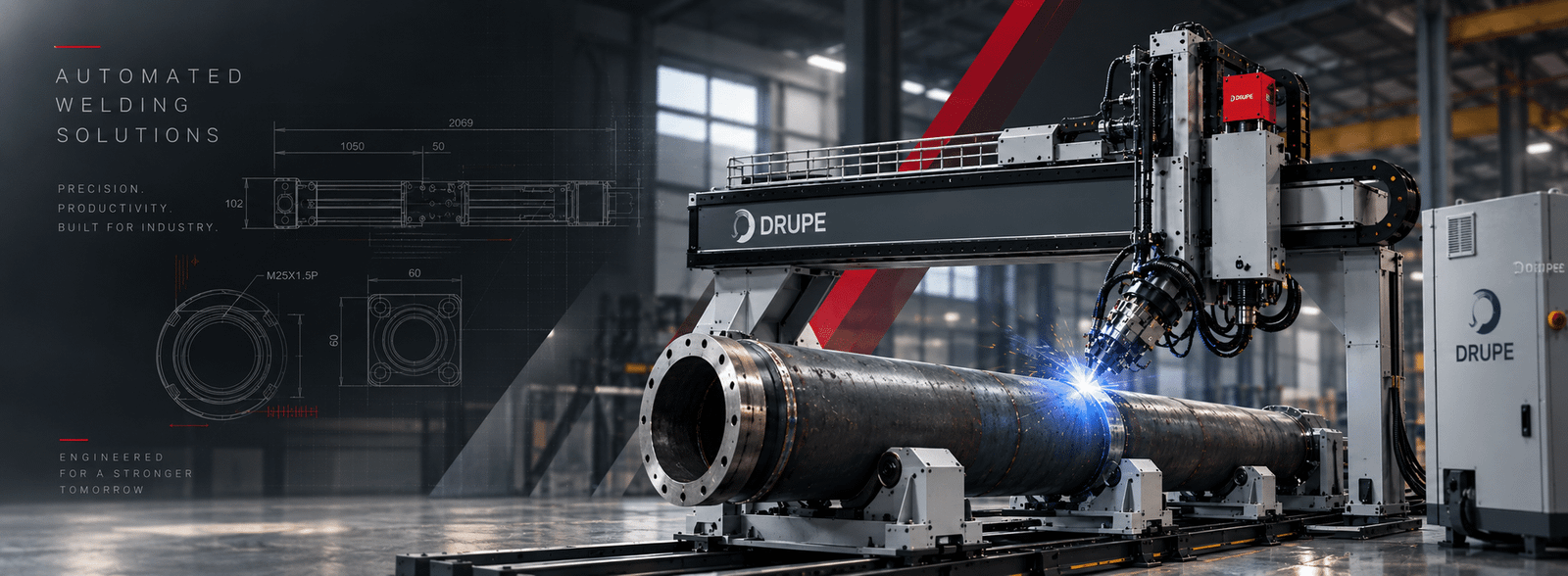
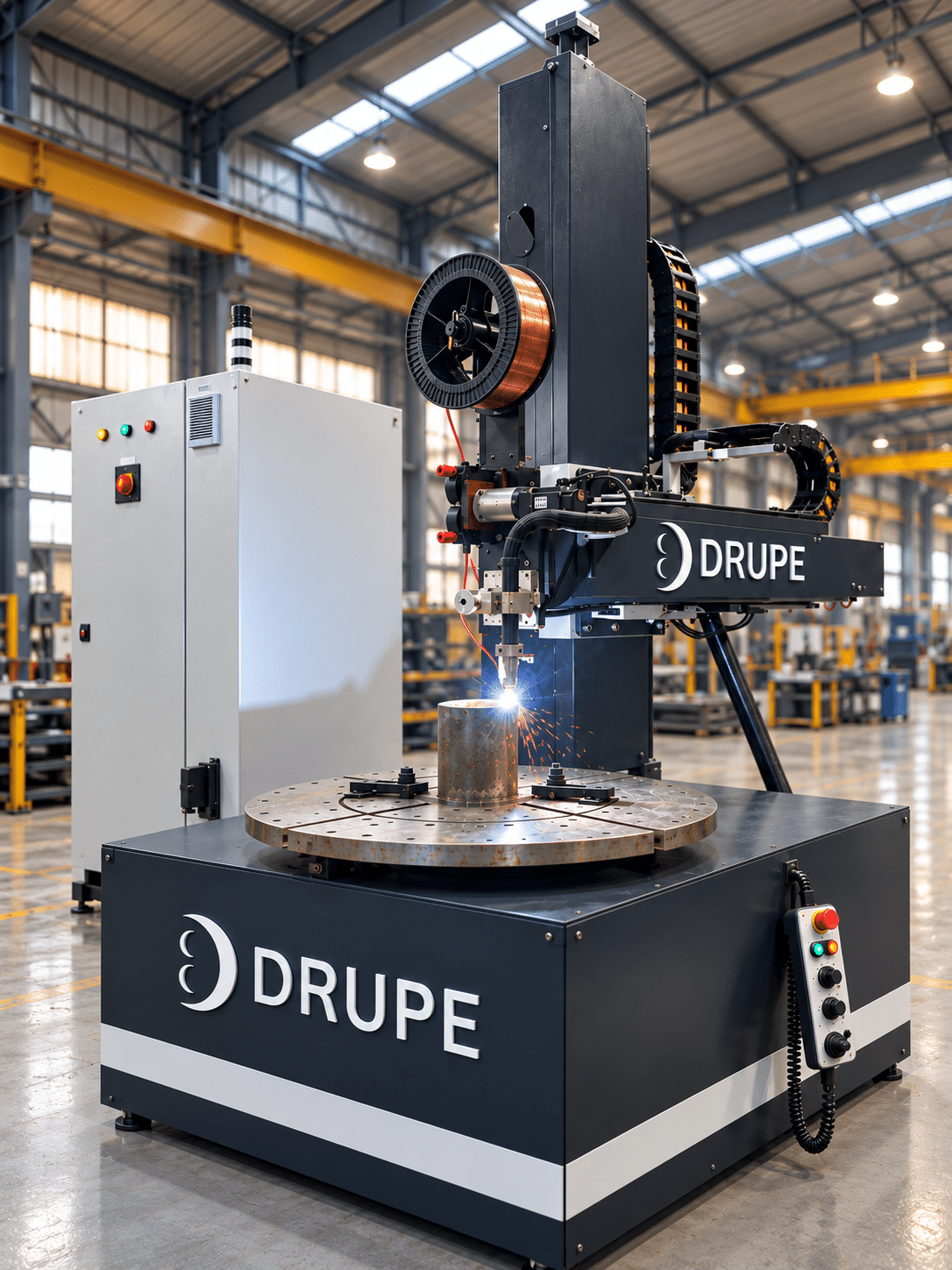
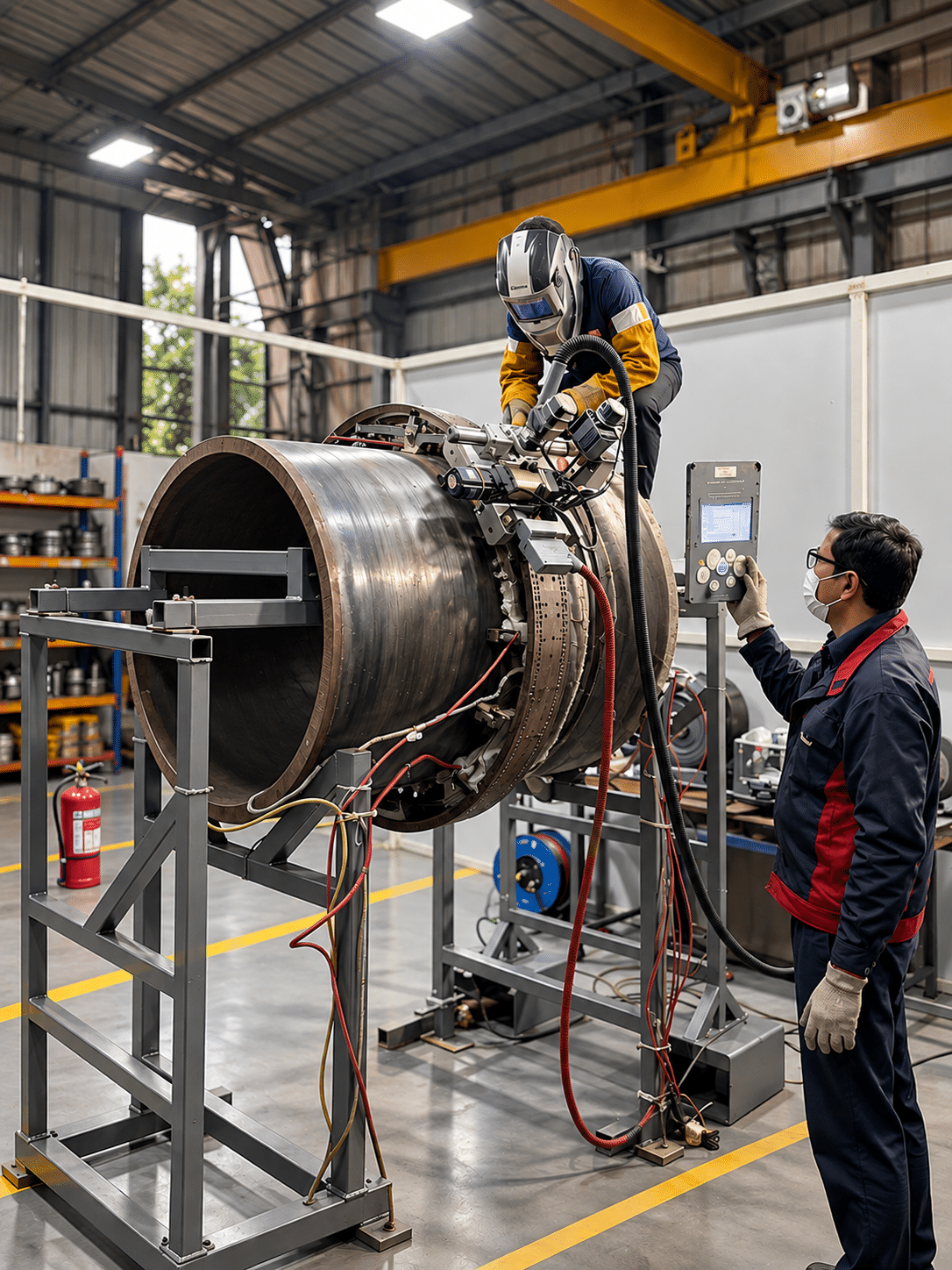
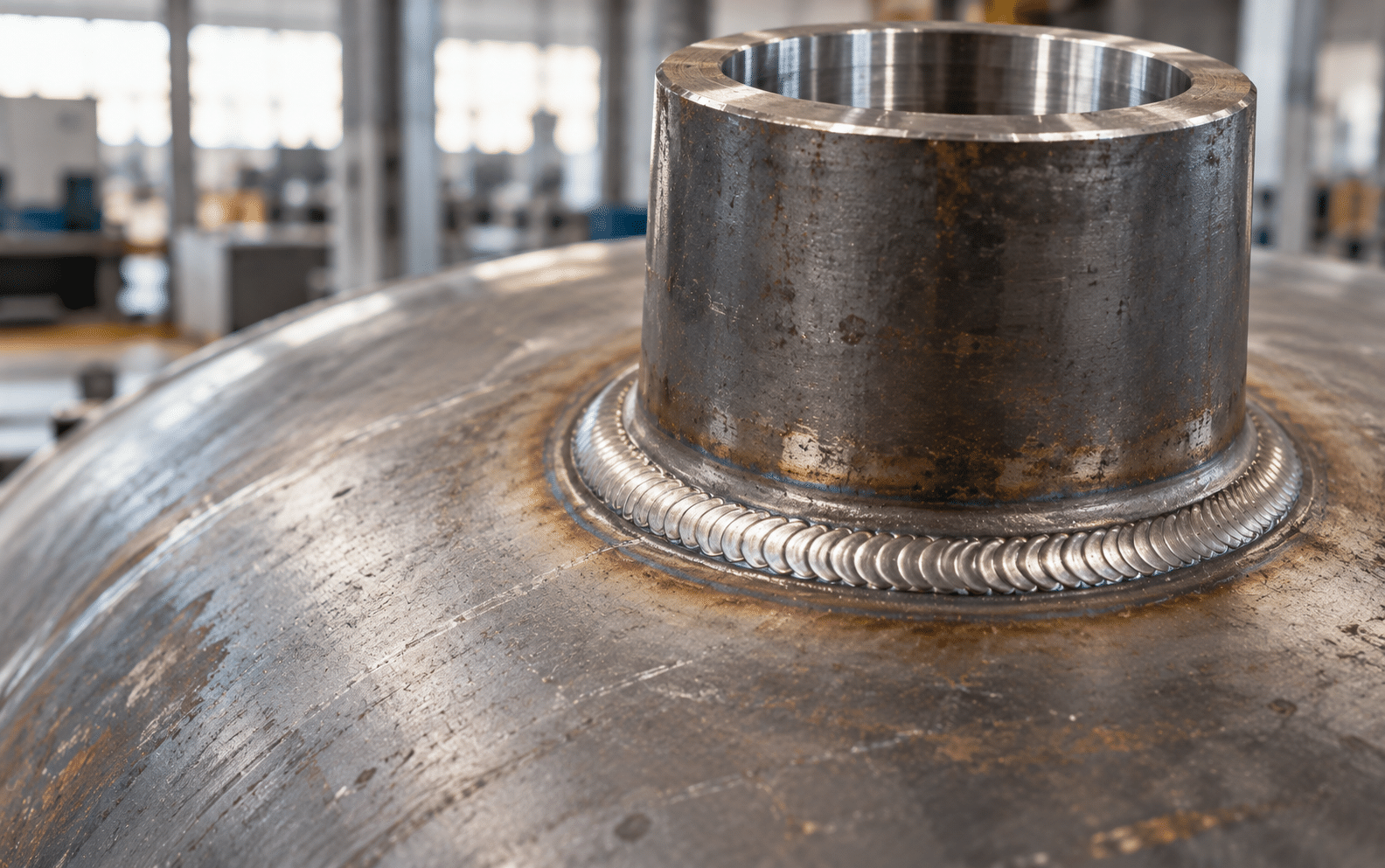
Track, nozzle and robotic arc welding, and wire or strip overlay cladding, for vessels, tanks, pipe and structures. Nozzles from 200 to 800 mm OD on shells to 150 mm thick, and robot tracks repeatable to ±0.02 mm.
A seam welded by hand carries the welder's fatigue, a repair that repeats the work, and parameters nobody recorded. Drupe systems hold travel speed, torch position and arc length from start to finish, and log every joint for QA.
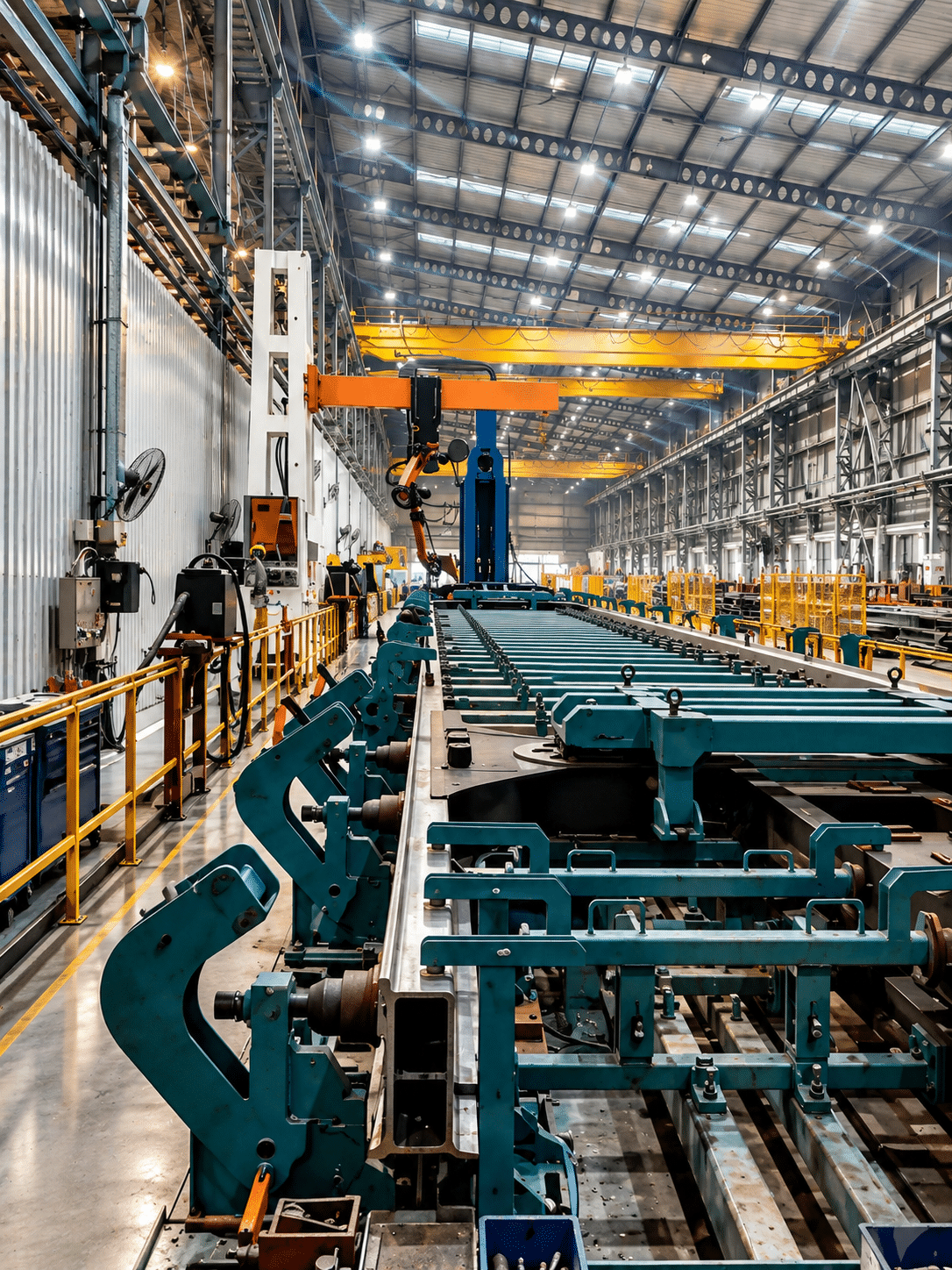
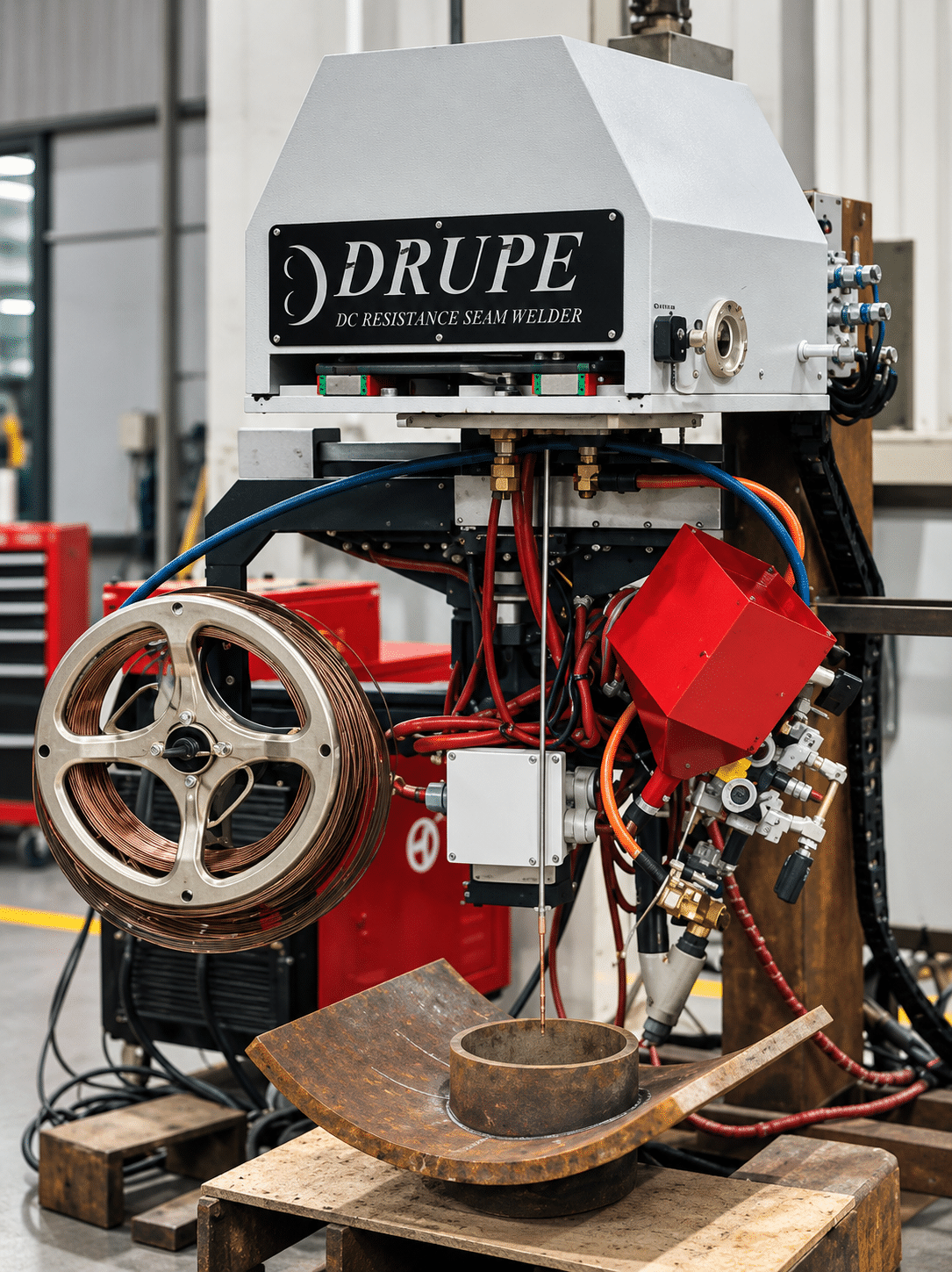
The range covers a flexible-track welding carriage for parts too large to move, a SAW nozzle welder for nozzle-to-shell joints, vertical and horizontal overlay cladding with wire or strip, and robotic arc welding on Drupe linear tracks with laser seam tracking. All four run on one Drupe control platform.

Choose by the joint or surface you need to weld, then confirm the working range on the system page.


Not sure which machine fits your weld? Send us your part and process, and we’ll recommend the right setup, whether that’s a standard system or a custom SPM.
Tell us what you’re welding.

Code work is judged joint by joint. Nozzles, long seams and circumferential seams welded at fixed speed and torch position, with the parameters of each one on record.
– SAW nozzle welding, internal and external, nozzle OD 200 to 800 mm – Long and circumferential seams on FusionFlex Track
– Wire or strip overlay cladding of flanges, rings and nozzles
– Data logging for QA and inspection
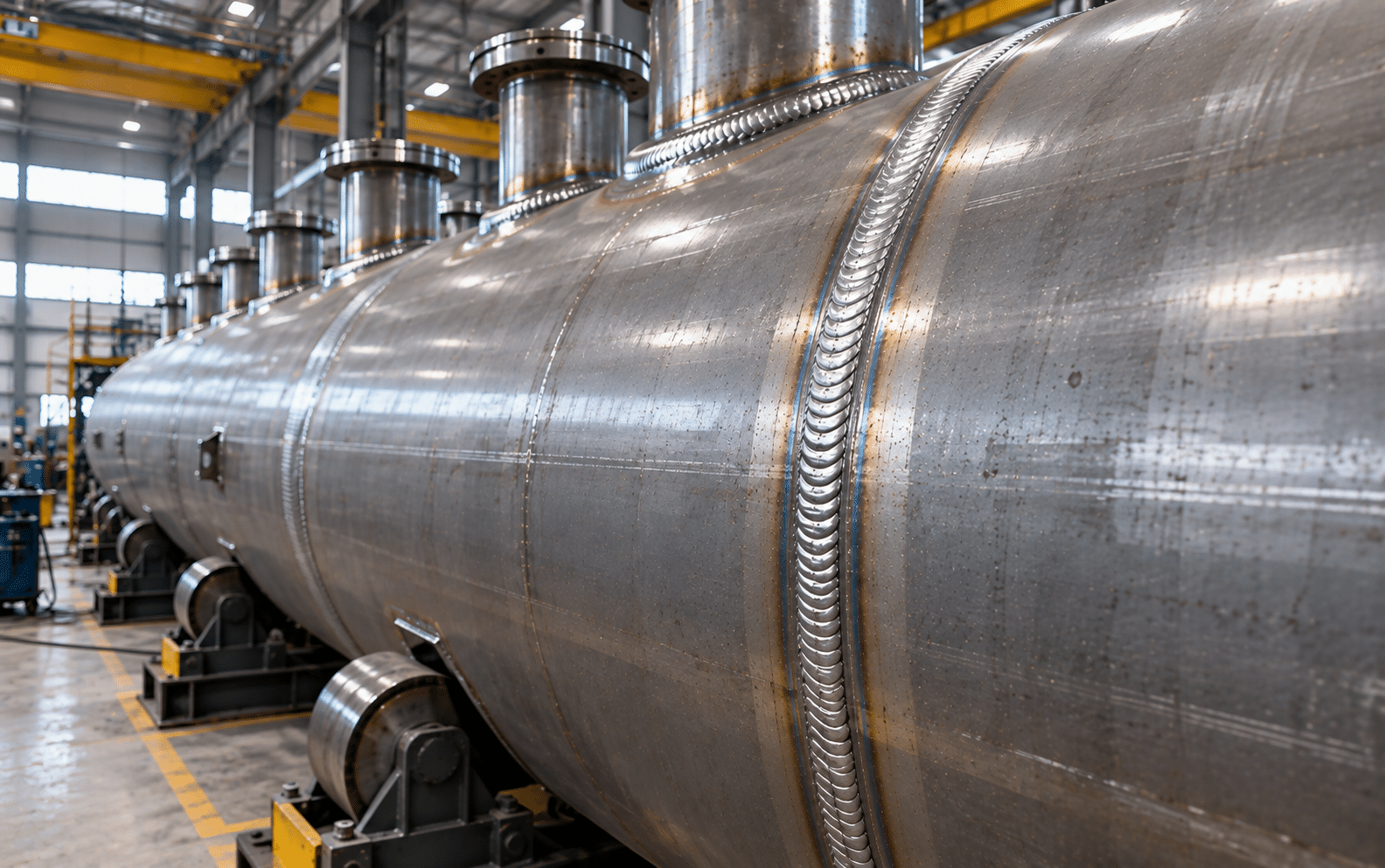
Long shells and big drums leave little room for rework. Shell seams, drum nozzles and headers welded at a consistent travel speed and heat input, so the weld at the last metre matches the first.
– Long and circumferential seams on shells and drums on FusionFlex Track
– SAW nozzle welding on drums and headers, internal and external
– Torch holders and slip rings for continuous welding on rotators and positioners
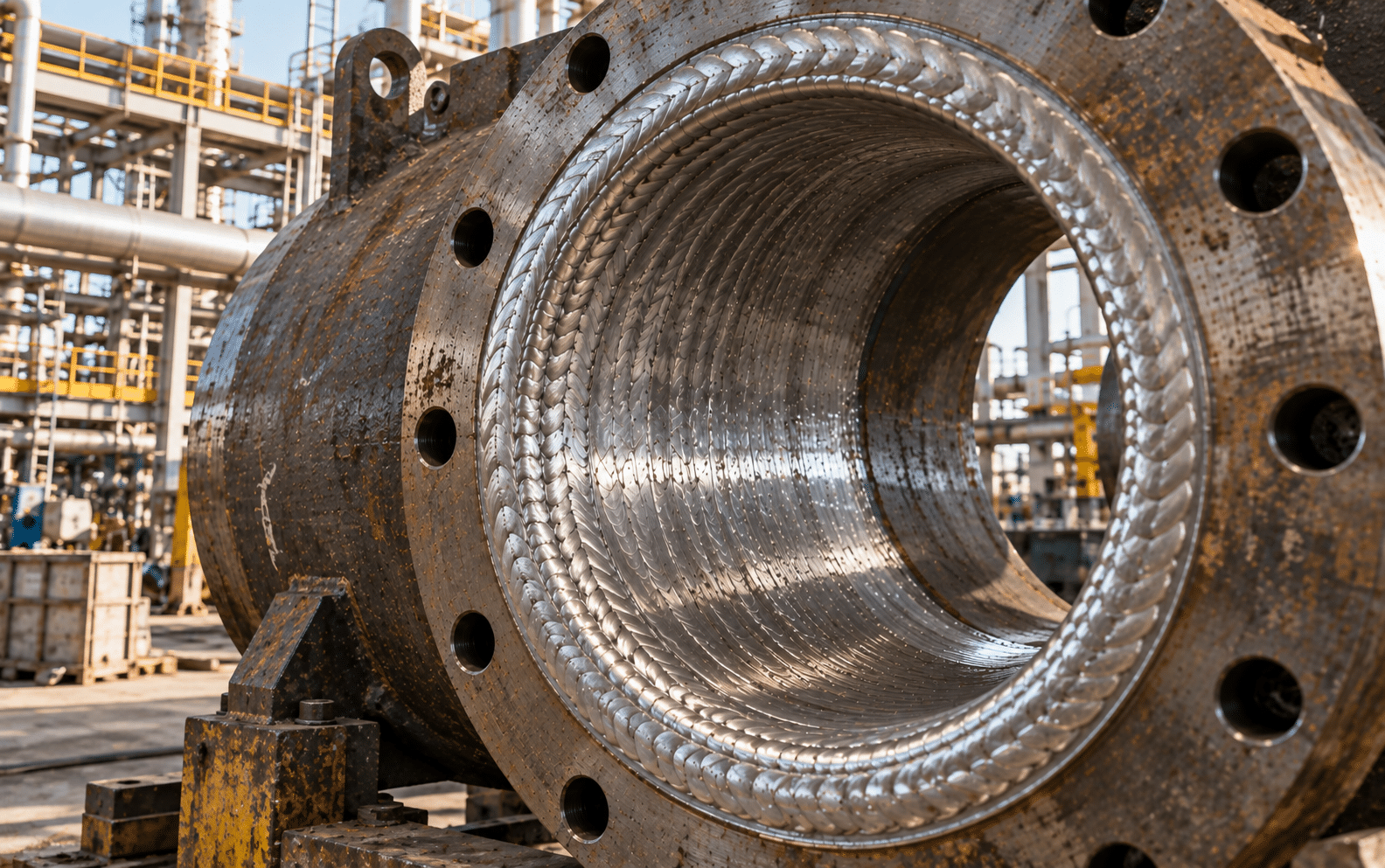
Corrosion resistance comes down to how evenly the overlay goes on. Cladding, nozzle and seam work carried out with controlled dilution and bead overlap, with every pass on record for inspection.
– Wire or strip overlay cladding of valve bodies, flanges and pipe ends
– Nozzle welding on separators, vessels and process equipment
– Long and circumferential seams on FusionFlex Track
– Data logging for QA and third-party inspection
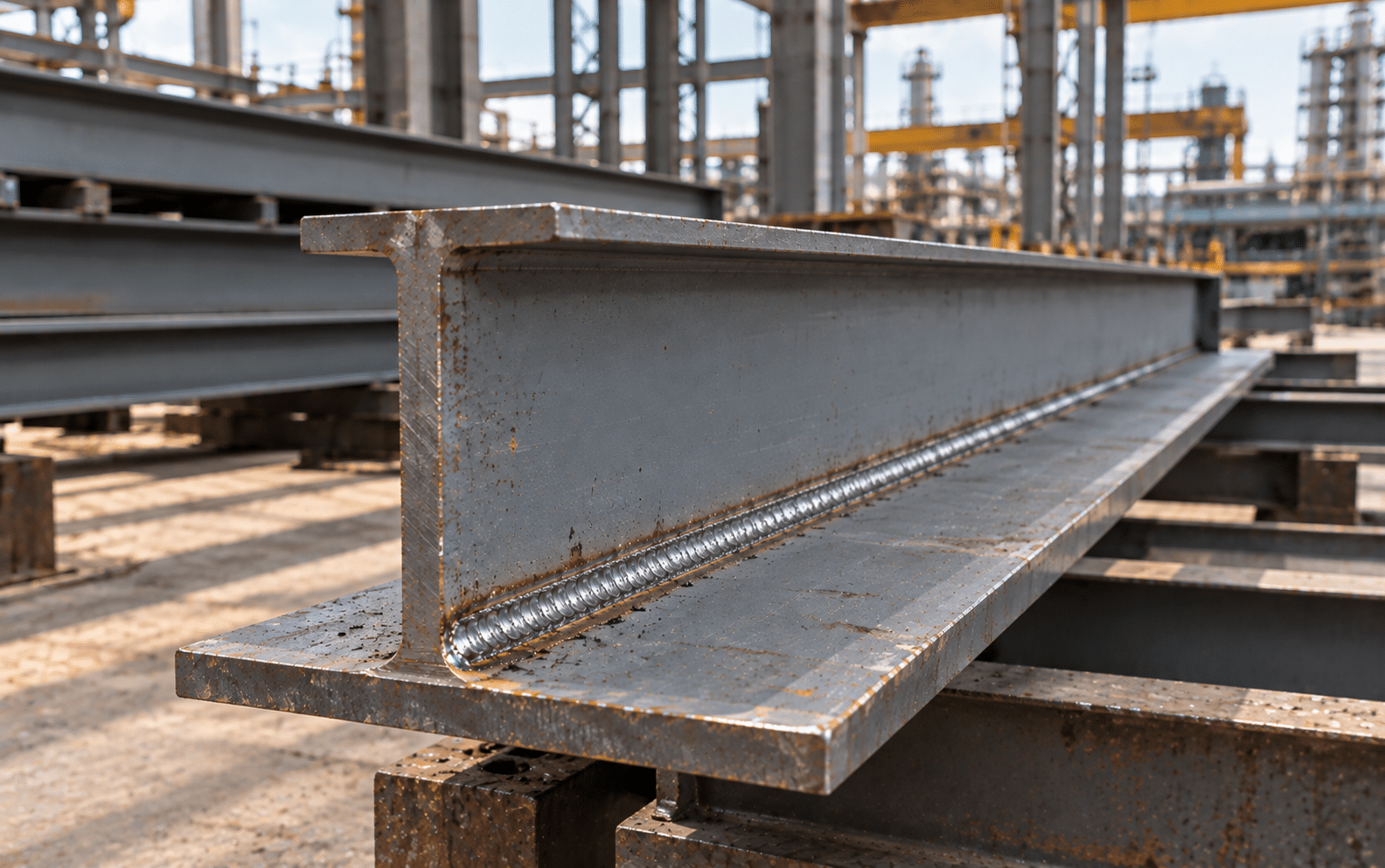
Volume is the challenge here. Flange-to-web and long fillet welds run at production speed with fixed torch angle, so beams and columns come off the line at uniform quality, shift after shift.
– SAW fillet welding of built-up beams, columns and rafters
– Long seam welding on FusionFlex Track
– Torch holders configured for single or multiple torches
– Repeatable settings saved per section size
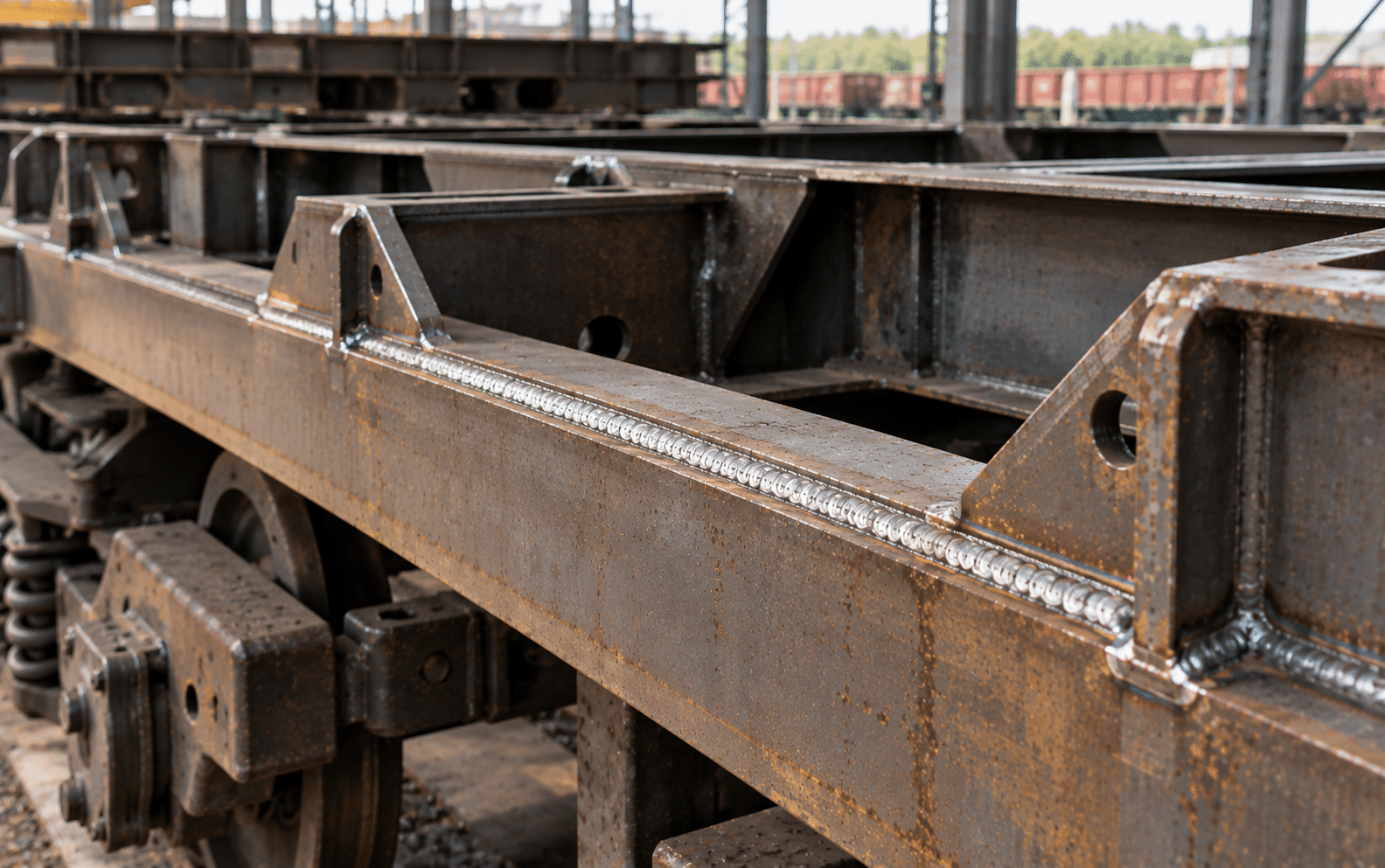
Frames and underframes carry load for decades, so weld consistency is non-negotiable. Long fillets and structural joints welded with fixed parameters across every unit in the batch.
– Long fillet welding of sole bars, side sills and underframe members
– Arc welding automation for bogie frames and structural assemblies
– Torch holders for consistent angle on long runs
– Parameter records per unit for traceability
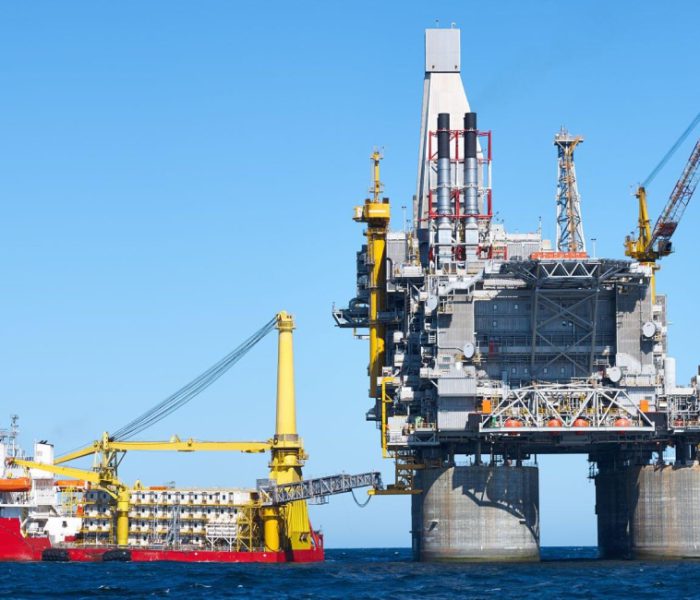
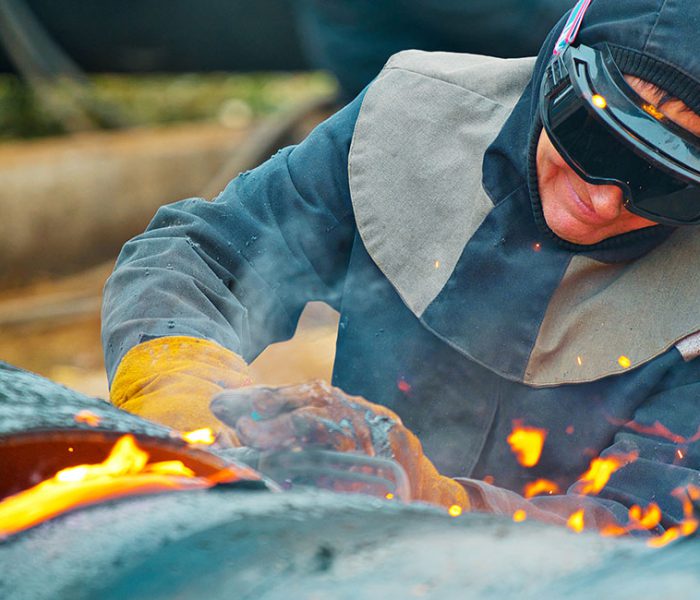
Code work is judged joint by joint. Nozzles, long seams and circumferential seams welded at fixed speed and torch position, with the parameters of each one on record.
– SAW nozzle welding, internal and external, nozzle OD 200 to 800 mm – Long and circumferential seams on FusionFlex Track
– Wire or strip overlay cladding of flanges, rings and nozzles
– Data logging for QA and inspection

Long shells and big drums leave little room for rework. Shell seams, drum nozzles and headers welded at a consistent travel speed and heat input, so the weld at the last metre matches the first.
– Long and circumferential seams on shells and drums on FusionFlex Track
– SAW nozzle welding on drums and headers, internal and external
– Torch holders and slip rings for continuous welding on rotators and positioners

Corrosion resistance comes down to how evenly the overlay goes on. Cladding, nozzle and seam work carried out with controlled dilution and bead overlap, with every pass on record for inspection.
– Wire or strip overlay cladding of valve bodies, flanges and pipe ends
– Nozzle welding on separators, vessels and process equipment
– Long and circumferential seams on FusionFlex Track
– Data logging for QA and third-party inspection

Volume is the challenge here. Flange-to-web and long fillet welds run at production speed with fixed torch angle, so beams and columns come off the line at uniform quality, shift after shift.
– SAW fillet welding of built-up beams, columns and rafters
– Long seam welding on FusionFlex Track
– Torch holders configured for single or multiple torches
– Repeatable settings saved per section size

Frames and underframes carry load for decades, so weld consistency is non-negotiable. Long fillets and structural joints welded with fixed parameters across every unit in the batch.
– Long fillet welding of sole bars, side sills and underframe members
– Arc welding automation for bogie frames and structural assemblies
– Torch holders for consistent angle on long runs
– Parameter records per unit for traceability
Every Drupe welding system starts with your joint and your process, gets engineered to your floor and cycle time, then is commissioned on site and supported for the life of the machine. Send us the joint you need to weld.
Choose a dedicated machine when you weld the same long seam or nozzle again and again. Choose a robot when your parts have many joints in different positions, or when you run a mix of part types. A robot can be reprogrammed for a new part, while a dedicated machine does one job very fast. Send us your part mix and we will recommend the right one.
Automatic welding machines are built around one type of joint, such as a long seam, a circumferential seam or a nozzle, and do that job very fast and very consistently. Robotic welding uses a programmable arm that can reach many joints in different positions and switch between part types. In heavy fabrication, most shops benefit from both: dedicated machines for long, repetitive welds and robots for complex assemblies.
Consistent weld quality, higher deposition rates, less rework and a smaller dependence on scarce skilled welders. Automated systems also run longer arc-on time per shift than manual welding and record parameters for every joint, which simplifies QA and inspection. The biggest gains show up on long seams, thick sections and repeat jobs, where manual welding is slowest and most variable.
That depends on the joint. Nozzles go on the Nozzle Welder, long and circumferential seams on FusionFlex Track, and overlay work on our cladding systems. For complex parts with many short welds or changing joint paths, a robotic welding cell is usually the better fit. Torch holders and slip rings let you automate on rotators and positioners you already own. If your part doesn’t fit any of these, we build a welding SPM around it.
If you weld the same joint types repeatedly, usually yes. Payback comes from faster arc time, less rework, lower consumable waste and fewer skilled hours per part. It’s weakest for one-off jobs with constantly changing joints. Share your joint types and monthly output, and we will tell you honestly whether automation pays back for your shop.
It depends on the system and the joint. The Nozzle Welder runs submerged arc (SAW) for the penetration and deposition nozzle joints need. Cladding systems overlay with wire or strip. FusionFlex Track and our robotic systems run SAW, MIG or TIG, depending on what your joint calls for. Send us the WPS you weld to and we will confirm the process against it.
It depends on the make and model. Drupe controls work with several power source brands, so in many cases you keep the equipment and the parameters your welders already trust. If yours isn’t compatible, or you are starting fresh, we supply the system with a Fronius or SigmaWeld power source. Tell us what you run today and we will confirm before you order.
Yes. Our systems are designed and built in Navi Mumbai and installed for fabricators across India and abroad.
Industry's standard dummy text ever...
Oil FactoryIndustry's standard dummy text ever...
ManufactureIndustry's standard dummy text ever...
Oil FactoryIndustry's standard dummy text ever...
ManufactureWe use cookies to improve your experience on our site. By using our site, you consent to cookies.
Manage your cookie preferences below:
Essential cookies enable basic functions and are necessary for the proper function of the website.
These cookies are needed for adding comments on this website.
Statistics cookies collect information anonymously. This information helps us understand how visitors use our website.
Google Analytics is a powerful tool that tracks and analyzes website traffic for informed marketing decisions.
Service URL: policies.google.com (opens in a new window)